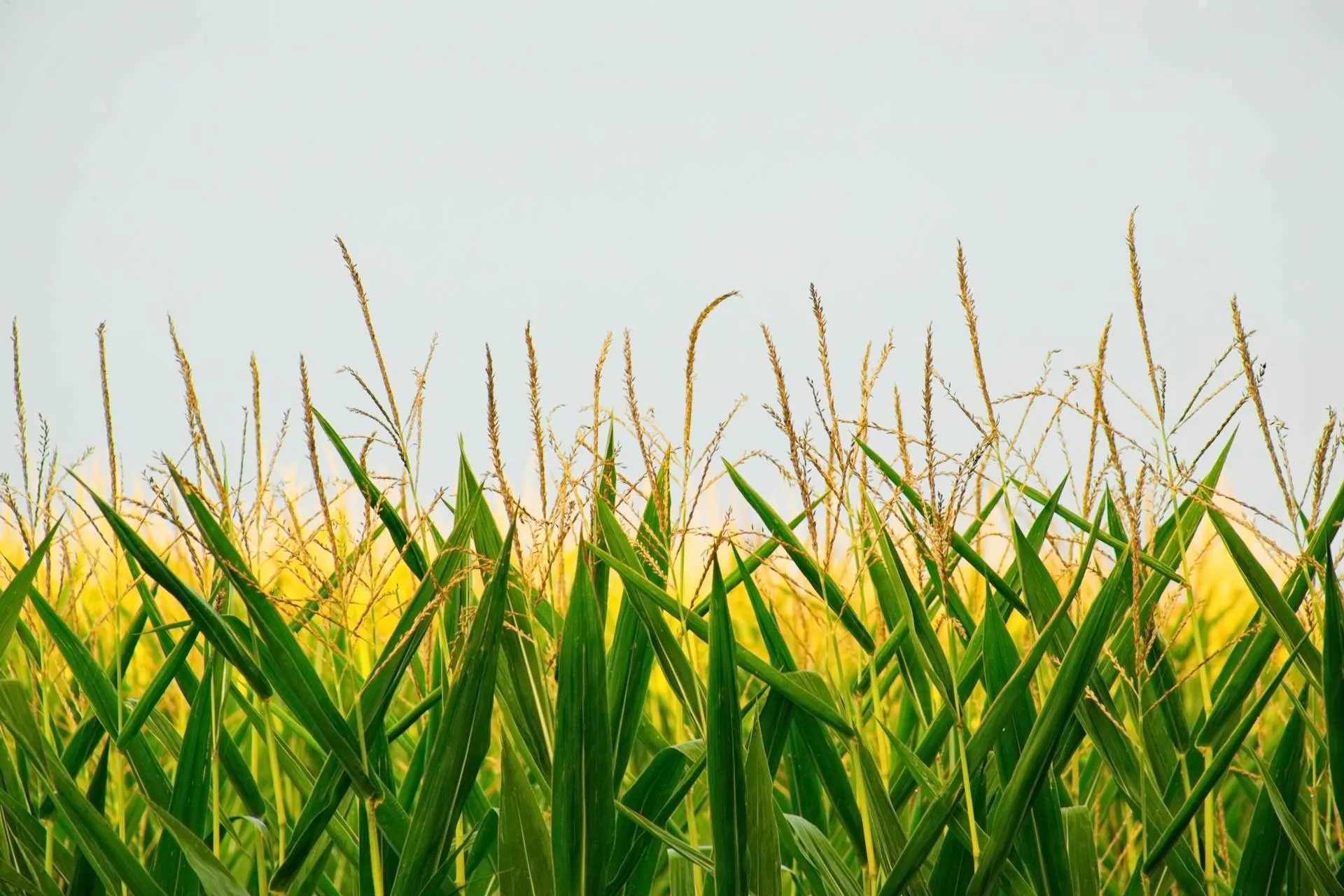
Maize
Zea mays L.
Maize (Makka) is the third most important cereal crop in India after rice and wheat. It is known as the "Queen of Cereals" due to its high yield potential and multiple uses. Maize is cultivated across diverse agro-climatic zones and serves as food, feed, and industrial raw material. In India, maize is grown in both rainfed and irrigated conditions. It is a versatile crop suitable for Kharif, Rabi, and Zaid seasons. Major maize-growing states include Karnataka, Madhya Pradesh, Bihar, Uttar Pradesh, Rajasthan, Andhra Pradesh, and Telangana. Economic Importance: Used for human consumption (20%), poultry feed (50%), industrial products (25%), and cattle feed (5%) Source of starch, oil, protein, and alcoholic beverages Growing demand in poultry and starch industries Short duration crop suitable for crop rotation and intercropping High energy content makes it valuable for livestock feed Nutritional Value (per 100g): Calories: 342 kcal Carbohydrates: 74.3 g Protein: 9.4 g Fat: 3.6 g Fiber: 2.7 g Rich in vitamins B1, B5, and minerals like phosphorus and magnesium
Overview
Crop summary and key facts
Maize (Makka) is the third most important cereal crop in India after rice and wheat. It is known as the "Queen of Cereals" due to its high yield potential and multiple uses. Maize is cultivated across diverse agro-climatic zones and serves as food, feed, and industrial raw material.
In India, maize is grown in both rainfed and irrigated conditions. It is a versatile crop suitable for Kharif, Rabi, and Zaid seasons. Major maize-growing states include Karnataka, Madhya Pradesh, Bihar, Uttar Pradesh, Rajasthan, Andhra Pradesh, and Telangana.
Economic Importance:
- Used for human consumption (20%), poultry feed (50%), industrial products (25%), and cattle feed (5%)
- Source of starch, oil, protein, and alcoholic beverages
- Growing demand in poultry and starch industries
- Short duration crop suitable for crop rotation and intercropping
- High energy content makes it valuable for livestock feed
Nutritional Value (per 100g):
- Calories: 342 kcal
- Carbohydrates: 74.3 g
- Protein: 9.4 g
- Fat: 3.6 g
- Fiber: 2.7 g
- Rich in vitamins B1, B5, and minerals like phosphorus and magnesium
Key Information
Scientific Name
Zea mays L.
Category
Season
Kharif
Sowing: June – July • Harvest: September – October
Expected Yield
25-30 Quintal per Acre
Growing Information
Maize is widely cultivated across India under different climatic conditions.
Major Maize Growing States:
- Karnataka: Highest producer, suitable for hybrids
- Madhya Pradesh: Large rainfed cultivation area
- Bihar: Cultivated in Kharif, Rabi, and Zaid seasons
- Uttar Pradesh: High-yielding hybrid cultivation
- Rajasthan: Drought-tolerant maize cultivation
- Maharashtra: Major production in Vidarbha region
- Andhra Pradesh & Telangana: Rapid hybrid adoption
Other Suitable States:
- Tamil Nadu, Gujarat, Punjab, Haryana
- West Bengal, Odisha, Jharkhand, Chhattisgarh
- Himachal Pradesh (hilly regions)
Special Growing Zones:
- Baby Corn: Punjab, Haryana, Western UP
- Sweet Corn: Punjab, Maharashtra, Karnataka
- Popcorn: Madhya Pradesh, Maharashtra
- Hybrid Seed Production: Karnataka, Andhra Pradesh, Tamil Nadu
Soil & Climate
Optimal environmental conditions
Soil Requirements
Maize can be grown in a wide range of soils, but certain soil conditions are ideal for maximum productivity.
Suitable Soil Types:
- Deep, well-drained loamy to sandy loam soils are best
- Black cotton soils (with proper drainage)
- Alluvial soils with good organic matter content
- Red laterite soils (with adequate fertility management)
Soil pH: 5.5 to 7.5 (optimal: 6.0 to 7.0)
Soil Depth: Minimum 45-60 cm for good root development
Soil Preparation:
- One deep ploughing with soil-turning plough to break hard pan
- Two to three harrowings with planking for fine tilth
- Ensure proper leveling for uniform irrigation and germination
- Remove previous crop stubbles and weeds completely
- Apply FYM or compost at 8-10 tonnes per acre during last ploughing
Avoid:
- Water-logged and poorly drained soils
- Highly saline and alkaline soils (EC > 4 dS/m)
- Very light sandy soils with poor water-holding capacity
- Soils with shallow depth and hard pan
Climate Requirements
To get the best harvest, maize needs the right balance of heat, water, and sunlight. Here is the simple guide for Indian conditions:
1. Temperature (The "Comfort Zone")
- Best for Growth: Between 21°C and 30°C.
- Sowing: The soil should be warm (21–27°C) for seeds to sprout well.
- Warning: Maize cannot survive frost. Also, temperatures above 35°C during flowering can dry up the pollen and reduce your yield.
2. Water and Rainfall
- Total Water: The crop needs about 50–65 cm of water throughout its life.
- Most Critical Times: Never let the field go dry during tasseling (when the top flowers appear) and grain filling.
- Season Tip: Kharif maize grows well with rain, but Rabi and Summer maize need regular irrigation.
3. Sunlight and Humidity
- Sunlight: Maize loves the sun! It needs 6 to 8 hours of direct bright sunlight every day.
- Cloudy weather during the end of the season can lead to smaller grains.
- Humidity: Moderate air moisture (50–70%) is best. Very high humidity can bring pests and diseases.
4. When to Sow (Seasons)
Depending on where you live in India, you can grow maize in three seasons:
| Season | Sowing Time | Best Region |
|---|---|---|
| Kharif (Monsoon) | June – July | Most common across India |
| Rabi (Winter) | October – November | South and East India |
| Zaid (Spring/Summer) | February – March | Areas with irrigation facilities |
Key Summary for Farmers:
Avoid extreme heat during flowering and ensure the crop has enough water
when the grains are starting to form.
Season
Kharif
Sowing: June – July
Harvest: September – October
Varieties
Recommended seeds and cultivars
DHM-117 (Deccan Hybrid Maize)
Single Cross HybridYield Potential
32-38 Quintal per Acre
Maturity
85-90 days
Resistance
Pusa Vivek QPM-9 (Quality Protein Maize)
Open Pollinated Variety (OPV) - QPMYield Potential
24-28 Quintal per Acre
Maturity
90-95 days
Resistance
NK-6240 (Syngenta)
Single Cross HybridYield Potential
38-45 Quintal per Acre
Maturity
95-100 days
Resistance
Seed & Planting
Sowing rates, spacing, and methods
For a successful harvest, choosing and treating your seeds correctly is the most important first step. Here is the vital information you need:
1. How Much Seed Do You Need? (Per Acre)
- Hybrid Varieties: 6–8 kg
- Sweet Corn: 7–9 kg
- Composite / OPV: 8–10 kg
- Baby Corn: 10–12 kg
2. Choosing Quality Seeds
- Buy Certified: Always buy from trusted, authorized shops.
- Check Health: Seeds should be clean, same-sized, and free from cracks or holes.
- Germination: At least 90 out of 100 seeds must sprout.
- Moisture: Seeds should be dry (12–14% moisture).
3. Seed Treatment (Beej Upchar)
Protect your seeds from pests and diseases by treating them in this specific order:
- Step 1 (Fungicide): Use Thiram (3g/kg) or Carbendazim (2g/kg). Dry in the shade.
- Step 2 (Insecticide): Use Imidacloprid (9ml/kg) or Thiamethoxam (10ml/kg).
- Step 3 (Bio-fertilizer): Use Azotobacter or PSB (50–60g/kg).
Important:
If using Organic methods, use Trichoderma (10g/kg) or Neem oil (5ml/kg).
Sow seeds immediately after the final treatment.
4. Spacing and Planting
Proper distance between plants ensures better growth:
| Crop Type | Row to Row (cm) | Plant to Plant (cm) |
|---|---|---|
| Hybrid Maize | 60 cm | 20 cm |
| Sweet Corn | 60 cm | 15–20 cm |
| Baby Corn | 45–60 cm | 10–15 cm |
| Composite | 60 cm | 20–25 cm |
Cultivation
Field preparation and agronomy
Cultivation
1. Land Preparation
- One deep ploughing followed by 2–3 harrowings
- Apply 8–10 tonnes FYM or compost per acre
- Level the field properly before sowing
- Prepare bunds for water conservation during Kharif
2. Sowing Time
- Kharif: June–July
- Rabi: October–November
- Zaid: February–March
- Early sowing gives better yield
3. Sowing Methods
- Dibbling, plough method, or seed drill
- Seed drill or maize planter is recommended
- Sowing depth: 4–7 cm depending on soil type
4. Spacing
- Normal Varieties: 60 × 20–25 cm
- Hybrid Varieties: 60 × 20 cm or 75 × 15–20 cm
- Plant Population: 22,000–24,000 plants per acre
5. Gap Filling
- Check germination within 7–10 days
- Fill gaps using healthy seedlings of same variety
- Complete within 15 days after sowing
6. Thinning
- Do thinning at 15–20 days after sowing
- Keep one healthy plant per hill
- Remove weak and diseased plants
7. Intercultivation & Weeding
- First weeding at 15–20 days
- Second weeding at 30–35 days
- Keep field weed-free up to 45 days
- Use wheel hoe or cultivator between rows
8. Earthing-up
- Perform at 25–30 days (knee-high stage)
- Helps root growth and lodging resistance
- Improves drainage in rainy conditions
9. Detasseling (Hybrid Seed Production)
- Remove tassels from female plants before pollen shedding
- Maintain male:female ratio of 1:6 or 1:8
- Complete within 5–7 days for proper pollination
Stages
Crop growth timeline and key tasks
1
Germination & Seedling Stage (VE-V3)
This stage begins with seed sowing and continues until 3-4 leaves appear. Germination usually occurs within 5-8 days under suitable conditions.
Duration: 0-21 days after sowing
Key Characteristics:
- Emergence of first true leaves
- Development of root system
- Plant height: 10-25 cm
- 3-4 leaves visible
Recommended Practices
Recommended Practices:
- Maintain adequate soil moisture
- Avoid water logging
- Protect seedlings from birds and pests
- Fill gaps if germination is poor
- Control weeds at early stage
2
Vegetative Growth Stage (V4-V12)
This is the active growth phase where the maize plant rapidly increases in height and leaf development. The plant develops a strong stem and root system for future grain production.
Duration: 22-45 days after sowing
Key Characteristics:
- Rapid leaf growth and stem development
- Plant height reaches 80-150 cm
- Development of 8-12 leaves
- Strong root system formation
- High water and nutrient requirement
Recommended Practices
Recommended Practices:
- Apply first Nitrogen top dressing at knee-high stage
- Carry out earthing-up and weeding operations
- Ensure proper irrigation
- Monitor stem borer and fall armyworm attack
- Maintain weed-free field conditions
- Apply micronutrients if deficiency symptoms appear
3
Tasseling & Flowering Stage (VT-R1)
This is the most critical reproductive stage where tassels and silks emerge for pollination. Proper pollination during this stage determines grain number and final yield.
Duration: 46-65 days after sowing
Key Characteristics:
- Tassel and silk emergence begins
- Pollination and fertilization take place
- Plant reaches maximum height
- Peak water and nutrient requirement
- Ear development starts
Recommended Practices
Recommended Practices:
- Maintain continuous soil moisture
- Apply second Nitrogen top dressing
- Avoid water stress during silking stage
- Monitor pests and diseases regularly
- Avoid pesticide spray during peak flowering
- Protect crop from bird damage
4
Grain Filling & Dough Stage (R2-R4)
After pollination, kernels start developing and filling with starch. This stage is important for grain size, weight, and overall yield.
Duration: 66-95 days after sowing
Key Characteristics:
Kernels change from milky to dough stage
Cob size reaches maximum
Grains begin changing color
Lower leaves start drying naturally
Rapid grain weight increase
Recommended Practices
Recommended Practices:
Maintain adequate soil moisture
Irrigate if moisture stress appears
Monitor cob borers and ear rot diseases
Protect cobs from birds and rodents
Avoid excess irrigation and water logging
Support lodged plants if needed
5
Physiological Maturity & Harvest Readiness (R5-R6)
This is the final stage where grains reach full maturity and maximum dry weight. Leaves and husks dry completely, and the crop becomes ready for harvest.
Duration: 96-110 days after sowing
Key Characteristics:
Black layer forms at kernel base
Grains become hard and fully colored
Leaves and husks turn dry and brown
Grain moisture reduces to safe harvest level
Cobs detach easily from stalk
Recommended Practices
Recommended Practices:
Stop irrigation 10-15 days before harvest
Monitor grain moisture regularly
Protect crop from birds and rodents
Avoid harvesting during rainy weather
Harvest on time to prevent lodging and grain loss
Dry grains properly after harvest
Nutrition
Fertilizers and deficiency remedies
Fertilizer Schedule
NPK & micronutrient application
Proper feeding of your maize crop is the secret to a heavy and healthy harvest. Follow this fertilizer plan for better crop growth and yield.
1. Recommended Fertilizer Dose (Per Acre)
Different maize types require different nutrient levels.
| Nutrient | Hybrid Varieties | Composite / Local | Baby Corn |
|---|---|---|---|
| Nitrogen (N) | 60–80 kg | 50–60 kg | 80–100 kg |
| Phosphorus (P) | 30–40 kg | 24–30 kg | 40–50 kg |
| Potash (K) | 24–32 kg | 20–24 kg | 32–40 kg |
| Zinc Sulphate | 10 kg | 10 kg | 12 kg |
2. When and How to Apply (The 3-Step Schedule)
Splitting Nitrogen (Urea) application into stages gives better results than applying everything at once.
Step 1: At Sowing (Basal Dose)
Apply all Phosphorus, Potash, and Zinc Sulphate, along with one-fourth of the Nitrogen dose.
- Hybrid: 26 kg Urea + 75–100 kg SSP + 32–40 kg MOP
- Local: 22 kg Urea + 60–75 kg SSP + 25–32 kg MOP
Tip: Mix fertilizer well with soil near the seed placement area.
Step 2: Knee-High Stage (25–30 DAS)
Apply half of the remaining Nitrogen dose.
- Hybrid: 52 kg Urea
- Local: 43 kg Urea
Tip: Apply near the plant base, cover with soil (earthing-up), and irrigate immediately.
Step 3: Tasseling Stage (45–50 DAS)
Apply the final Nitrogen dose.
- Hybrid: 26 kg Urea
- Local: 22 kg Urea
Tip: This stage helps the cobs grow larger and improves grain filling.
3. Organic Options and Bio-fertilizers
- FYM (Gobar Khaad): 8–10 tonnes per acre.
- Vermicompost: 2–3 tonnes per acre.
- Bio-fertilizers: Using Azotobacter or PSB (4–5 kg per acre) can reduce chemical fertilizer use by 10–15%.
4. Important Tips for Success
- Safety First: Never allow fertilizer to touch seeds directly, as it may burn them. Keep fertilizer 5–7 cm away from the seed.
- Watering: Do not apply fertilizer in completely dry soil. Ensure moisture is available or irrigate immediately after application.
- Foliar Spray: If leaves appear pale, spray 2% Urea solution or NPK (19:19:19) during evening hours for quick recovery.
- Zinc: Maize is highly sensitive to Zinc deficiency. If Zinc is missed during basal application, apply Zinc Sulphate spray later.
Nutrient Deficiencies & Remedies
Nitrogen (N) Deficiency
Phosphorus (P) Deficiency
Potassium (K) Deficiency
Zinc (Zn) Deficiency
Sulphur (S) Deficiency
Iron (Fe) Deficiency
Magnesium (Mg) Deficiency
Expert Tips & Guidance
Key Difference for Identification
| Deficiency | Which Leaves? | Look / Symptoms |
|---|---|---|
| Magnesium (Mg) | Older Bottom Leaves | Yellow stripes with green veins |
| Iron (Fe) | Younger Top Leaves | Yellow or white tissue with green veins |
| Nitrogen (N) | Older Bottom Leaves | "V" shaped yellowing pattern |
Irrigation
Water requirements and scheduling
Irrigation Schedule
Water & Irrigation Requirements
Irrigation Management in Maize
Maize is very sensitive to water—it hates both "dry feet" (drought) and "wet feet" (water-logging). Proper timing is the secret to a high-yielding crop.
1. Critical Stages for Water (The "Must-Water" Times)
If you have limited water, ensure the field has enough moisture during these stages. Missing irrigation here can cause major yield loss.
Sowing & Germination (0–10 days): Essential for proper seed sprouting.
Knee-High Stage (25–35 days): Needed for rapid vegetative growth.
Tasseling (45–55 days): When the top flowers appear. (Most Critical Stage)
Silking (55–65 days): When the silk ("hair") emerges from the cob. (Most Critical Stage)
Grain Filling (65–85 days): Helps grains become bold and heavy.
2. Season-Wise Irrigation Schedule
Season | Number of Irrigations | Note |
|---|---|---|
Kharif (Monsoon) | 2–4 times | Only if rains stop for 7–10 days. |
Rabi (Winter) | 4–6 times | Needed every 15–20 days. |
Zaid (Summer) | 6–8 times | Needed every 7–10 days due to heat. |
Pro Tip: Stop all irrigation 10–15 days before harvest to allow the cobs to dry properly.
3. Irrigation by Soil Type
Watering frequency depends on your soil type.
Sandy Soil: Water every 5–7 days (light irrigation).
Loam Soil: Water every 10–12 days.
Clay Soil: Water every 12–15 days.
4. Signs to Watch For
Need More Water? (Water Stress)
Leaves start rolling or curling like a needle.
Leaves look bluish-green instead of bright green.
The plant stops growing taller.
Too Much Water? (Water-logging)
Yellowing of the bottom leaves.
Water standing in the field for more than 24 hours (maize roots can die without air).
Solution: Ensure the field has a proper slope or drainage channel to remove extra water quickly.
5. Best Methods for Farmers
Furrow Irrigation: Create small channels (naali) between rows. This saves more water than flooding the entire field.
Drip Irrigation: If possible, use drip irrigation. It can save up to 50% water and improve yields significantly.
Timing: Irrigate during morning or evening hours to reduce water loss from evaporation.
Farmer's Rule: A light irrigation at the right time is far better than flooding the field with too much water.
Pests & Diseases
Identification, damage, and control
Pests
Fall Armyworm (Spodoptera frugiperda)
⚠️
How to Identify Fall Armyworm Damage
Farmers should inspect the field every 2 days
and look carefully for these warning signs:
Window Panes:
Very young caterpillars scrape away
the green leaf surface,
leaving small transparent "see-through" patches.
Ragged Holes:
As the caterpillar grows,
it creates large, messy,
irregular holes in the leaves.
Opened leaves often look torn by hand.
Fresh Sawdust (Frass):
Greenish-brown waste material
collects inside the central cup ("Bhonga").
If the frass looks fresh and wet,
the caterpillar is actively feeding inside.
Dead Heart:
In severe attacks,
the caterpillar destroys the central growing point.
The main shoot dries up and dies completely.
Fall Armyworm in Maize
Fall Armyworm is a highly destructive invasive pest. Unlike many local pests, it feeds aggressively and can damage an entire maize field within a few days if not controlled early.
The Caterpillar
The caterpillar varies from light green to dark brown in color. Two important identification marks are:
An upside-down white "Y" mark on the head.
Four dark spots arranged in a square shape near the tail end.
The Mother Moth
The adult is a grayish-colored moth that flies mainly at night. A single female moth can lay up to 1,000 eggs within one week, allowing infestations to spread rapidly.
Main Target Area
Fall Armyworm mainly attacks the "Bhonga" (central growing whorl or cup) of the maize plant, where the caterpillars hide and feed safely.
Stem Borer (Chilo partellus)
⚠️
Pinholes on Leaves:
Young caterpillars feed on rolled leaves inside the whorl.
When the leaves unfold,
small pinholes appear in straight rows across the leaf surface.
"Deadheart":
This is the most common and important symptom.
The central growing shoot dries up and dies
because the caterpillar damages the growing point.
The dried central leaf pulls out easily
and often gives a foul smell.
Stem Holes:
Circular holes appear on the stem surface.
Fine powdery waste material
("sawdust" or frass)
may be seen coming out of these holes.
Weak Plants:
As the caterpillars tunnel inside,
the stem becomes hollow and weak.
Plants may break or lodge easily
during strong wind or rain.
Stem Borer is one of the most destructive pests of maize in India. The caterpillars tunnel inside the stem, feeding from within and weakening the plant. If left uncontrolled, the pest can destroy 20–50% of the crop.
The Pest
The adult insect is a pale brown moth that is mostly active at night. The actual damage is caused by the larvae, which are creamy-white caterpillars with dark-colored heads.
How it Lives
Female moths lay flat, oval-shaped eggs in rows on the underside of maize leaves. After hatching, the young caterpillars move into the central whorl and later bore into the stem.
Life Cycle
The complete life cycle from egg to adult takes around 35–50 days. In Indian conditions, Stem Borer can complete 4–6 generations in a single year.
Aphids (Rhopalosiphum maidis)
⚠️
Curled Leaves:
Young leaves may curl, twist,
or develop a yellowish appearance.
Black Leaves:
A black powdery layer called
sooty mold
may develop on leaves due to the sticky honeydew,
reducing sunlight absorption.
Sticky Plants:
Leaves and tassels often feel sticky to the touch
because of honeydew secretion.
Pollination Problems:
When aphids cover the silks
(the hair-like structures on the cob),
pollination may fail,
resulting in partially filled or empty cobs.
Stunted Growth:
Heavy infestation weakens the entire plant,
causing poor growth and yield losses
of around 10–30%.
Aphids are small sap-sucking insects that live in large groups called colonies. They multiply very quickly, sometimes doubling their population every 2–3 days. Aphids weaken maize plants by sucking plant sap and can also spread harmful viral diseases.
The Pest
Aphids are tiny (1–2 mm), soft-bodied insects that are usually bluish-green or black. Their body is pear-shaped.
How They Live
They gather in crowded colonies on the underside of leaves, inside the central whorl, and around tassels.
The "Honeydew"
Aphids release a sticky sugary liquid called honeydew. This attracts ants and encourages the growth of black sooty mold on leaves.
Fast Breeders
A single female aphid can produce 40–50 young aphids without mating, allowing infestations to spread very rapidly.
Diseases
Turcicum Leaf Blight (Northern Corn Leaf Blight)
🦠
Watch for these symptoms beginning on the lower leaves
and gradually moving upward through the plant:
Cigar-Shaped Spots:
The most distinctive symptom is the appearance
of long, oval, cigar-shaped lesions
that are grayish-green or tan in color.
Large Lesions:
These spots can grow quite large,
ranging from 2 cm to 15 cm in length.
Water-Soaked Beginnings:
The lesions begin as small,
water-soaked spots before expanding
into the characteristic cigar shape.
Leaf Death:
In severe infections,
many lesions merge together,
causing entire leaves to dry and die prematurely.
Poor Grain Filling:
Early leaf death reduces the plant’s ability
to feed the cobs,
resulting in small and shriveled grains.
Turcicum Leaf Blight is one of the most damaging diseases of maize in India, especially in hilly regions and during the Kharif (Monsoon) season. If the disease attacks before flowering, it can reduce yield by 30–50%.
The Cause
The disease is caused by the fungus Exserohilum turcicum. It can survive on infected maize stalks and crop residues in the soil for up to 2 years.
Weather Conditions
The fungus grows best under moderate temperatures between 20–25°C with very high humidity. Continuous cloudy weather and frequent rainfall help the disease spread rapidly.
How it Spreads
The fungal spores spread through wind and rain splashes. Under wet conditions, the disease can move very quickly across the field.
Maydis Leaf Blight (Southern Corn Leaf Blight)
🦠
Watch for these symptoms beginning on the lower leaves
and gradually moving upward through the plant:
Small Rectangular Spots:
Small tan or light-brown spots appear on the leaves,
usually measuring about 0.3–2 cm long.
Striped Appearance:
The spots often grow parallel to the leaf veins,
giving the leaves a striped look.
Reddish Borders:
The lesions commonly develop reddish-brown edges
surrounding the lighter center.
Drying Leaves:
In severe infections,
many small spots merge together,
causing the leaves to dry, turn brown,
and die prematurely.
Ear & Husk Infection:
Black fungal growth may appear on the husks,
which can eventually lead to ear rot
and damaged cobs.
Maydis Leaf Blight is a serious fungal disease that thrives in the warm and humid regions of India, especially during the Kharif (Monsoon) season. It spreads quickly through wind-borne spores and can reduce yield by 20–40% if not controlled early.
The Cause
The disease is caused by the fungus Bipolaris maydis. It survives on old maize stalks and leaves left in the field after harvest.
Weather Conditions
The fungus grows best in warm temperatures between 25–32°C with high humidity (80–95%). Frequent rain followed by warm weather creates ideal conditions for infection.
How it Spreads
The fungal spores spread through the air and can infect all above-ground parts of the plant, including leaves, stalks, and husks.
Common Rust (Maize Rust)
🦠
Brown Bumps (Pustules):
Small circular or elongated raised bumps appear
on both the upper and lower surfaces of the leaves.
Powdery Spores:
These pustules are initially golden or cinnamon-brown.
When rubbed, they release a reddish-brown powder
that sticks to the fingers.
Late Stages:
As the crop matures,
the pustules gradually turn dark brown or black.
Plant Damage:
The disease usually begins on lower leaves
and slowly spreads upward.
Severely infected leaves turn yellow and dry early.
Weak Stalks:
In serious infections,
the plants become weak and may fall over (lodging),
while the grains remain small and poorly filled.
Common rust is a fungal disease that spreads quickly through wind-borne spores. In India, it is very common in areas with high humidity and moderate temperatures. It can cause a 10–30% loss in yield by damaging leaves and weakening the plant.
The Fungus
Common rust is caused by the fungus Puccinia sorghi. It survives and grows on the green tissue of maize plants.
How it Spreads
The fungal spores are carried by wind from one field to another. The disease can complete many life cycles in a single season, which allows it to spread very rapidly once infection begins.
Favorable Weather
The disease develops best during cool nights and warm days with temperatures between 16–25°C, along with very high humidity (above 95%) or heavy morning dew.
Alternate Host
The fungus can also survive on a small weed called Oxalis (wood sorrel / khatti booti). Removing this weed helps break the disease cycle and reduces future infection.
Expert Tips & Guidance
Application Tips for Farmers
Check Early: Start inspecting the lower leaves around 30 days after sowing for early rust symptoms.
Full Coverage: Ensure the spray reaches both the upper and lower surfaces of the leaves for effective disease control.
Use a Sticker: Always add a spreader/sticker ("chipko") so the spray solution sticks properly to the leaves, especially during dew or light moisture conditions.
Evening Spray: Apply fungicides in the early morning or late evening when wind is low and temperatures are cooler.
Rotate Medicines: Do not spray the same fungicide repeatedly. Rotate to a different chemical group for the second spray (after 10–12 days) to prevent the fungus from developing resistance.
Weeds
Weeds
Weeds compete with maize for water, nutrients, and sunlight. Proper weed control during the first 30-45 days is very important for better yield.
Critical Period:
- Keep field weed-free during first 45 days after sowing
- Heavy weed infestation can reduce yield significantly
Harvesting
Yield estimates and post-harvest care
Harvesting
When to Harvest:
- Signs: Harvest when leaves turn yellow and husk becomes dry and brown
- Black Layer: Black spot at grain attachment indicates full maturity
- Thumbnail Test: Grain should feel hard with no dent on pressing
- Harvest Time: 75-110 days after sowing (50-65 days for baby corn)
Harvesting Method:
- Harvest during early morning hours
- Pick cobs by hand or cut whole plant for fodder use
- Keep husk intact to protect grains from insects and rot
Important Precautions:
- Avoid harvesting during rain or when crop is wet
- Do not delay harvesting to prevent bird damage and lodging
- Do not store grains with high moisture
- Grain moisture should be below 25% at harvest
Expected Yield:
- Local Varieties: 15-20 quintals per acre
- Hybrid Varieties: 30-40 quintals per acre
Post-Harvest Handling
1. Drying & Shelling:
- Reduce grain moisture from 25% to 12-14% before storage
- Sun-dry cobs for 7-10 days and turn regularly
- Mechanical dryers can also be used
- Shell cobs manually or with a sheller after proper drying
2. Cleaning & Grading:
- Remove dust and chaff using winnowing or air blowers
- Separate broken, diseased, and discolored grains
- Grade grains by size and quality for better market price
3. Storage Essentials:
- Store grains in gunny bags or storage bins
- Keep bags on wooden planks above ground level
- Maintain space from walls for proper airflow
- Use hermetic bags for safe long-term storage
4. Pest Management:
- Mix Neem seed powder or approved dust treatments to prevent storage pests
- Use fumigation only under expert supervision
- Inspect stored grains every 15 days
- Re-dry grains if moisture rises above 14%
5. Utilization & Value Addition:
- Use stalks as cattle fodder
- Use cobs for fuel or manure preparation
- Use husks for composting
- Process grains into flour, popcorn, flakes, or starch for higher profit
References
Agricultural university and research guides
Important References:
- ICAR - Indian Institute of Maize Research (IIMR), Ludhiana
- Indian Council of Agricultural Research (ICAR), New Delhi
- Ministry of Agriculture & Farmers Welfare, Government of India
- Punjab Agricultural University (PAU), Ludhiana
- Tamil Nadu Agricultural University (TNAU), Coimbatore
- University of Agricultural Sciences (UAS), Bangalore
- Krishi Vigyan Kendras (KVKs) across India
- India Meteorological Department (IMD)
- CIMMYT - International Maize and Wheat Improvement Center
- Food and Agriculture Organization (FAO)
Frequently Asked Questions
Key questions and answers about Maize cultivation
Maize is mainly grown during the Kharif season, with sowing commonly done in June–July in many parts of India. It can also be grown during Rabi and spring seasons where suitable temperatures and irrigation are available. The ideal sowing time depends on the region and local weather.
Important Notice
The crop information presented here is for general educational and informational purposes only. Farm conditions, soil profiles, and weather patterns vary significantly. Always consult qualified agricultural extension officers, local scientists, or professional agronomists before starting complex planting, crop protection, or fertilization programs.
Join the conversation
Log in to share your thoughts and connect with other farmers.
Log in to commentAll comments